East Toronto Orthopaedic & Sports Injury Clinic and Trilogy Physiotherapy have partnered in order to provide you with the experienced and skilled care you deserve.
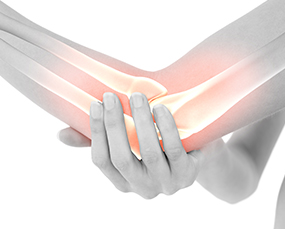
Do you have elbow pain when you reach into the fridge to grab a carton of milk, grip your steering wheel, or when you use a mouse or keyboard?
Elbow pain can be caused by a variety of reasons including due a traumatic injury, but most often it is caused by repetitive overuse of the muscles surrounding the elbow.
Common causes of elbow pain include:
Lateral Epicondylitis (Tennis Elbow)
This is an overuse injury that causes pain and inflammation of the tendons that attach to the outer bony prominence (lateral epicondyle) of the elbow.
The pain may extend into the forearm muscles and is usually aggravated when grasping or holding an object even as light as a cup of coffee. Any repetitive motion of the wrist such as hedge trimming, using a hammer or screwdriver, painting, or any activity that requires constant gripping or squeezing can cause tennis elbow. It can occur in anyone who strains the lateral elbow through overuse.
Small or large tears can be present in the extensor muscles of the wrist. Chronic elbow pain can develop with epicondylopathy or enthesopathy, a pathological state of the muscle tendons, especially at the point of their attachment to bone tissue.
Medial Epicondylitis (Golfer’s Elbow)
This is a condition that causes pain where the tendons of your forearm muscles attach to the bony bump on the inside of your elbow.
The pain might spread into your forearm and wrist, much like tennis elbow. This is also typically an overuse injury to the muscles and tendons. Similar activities as described for tennis elbow aggravate the pain, but with some differences. Athletes who throw can get golfer’s elbow due improper technique. There may also be numbness or tingling in the ring finger and pinky finger.
Ulnar Nerve Compression
The ulnar nerve passes through a boney groove along the inside of the elbow.
The nerve can cause pain, and at times, numbness along the inside of the forearm to the pinky and ring finger when irritated or inflamed. This can occur if someone hits their elbow sharply or leans on the elbow in a position that puts pressure on the nerve.
Physiotherapy Treatment
Management of the above conditions has been proven to be helpful in relieving pain, speed up recovery and rehabilitate chronic issues in the elbow.
Treatment involves education, self-care management, exercise therapy, and manual therapy are commonly used by a registered physiotherapist to treat elbow pain. Other treatments such as acupuncture, soft tissue release and massage therapy can also help. Bracing of the elbow can also be helpful for lateral and medial epicondylar issues. A registered physiotherapist can conduct a assessment and examination of your issue and recommend the appropriate treatment.
To book an appointment, Call Us today at 416-691-3943 or contact us here.
Frequently Asked Questions About Elbow Pain
How do you assess elbow pain?
An assessment of your elbow pain starts with a conversation between you and your therapist to determine when and how the elbow pain started, what type of pain it is, the severity and factors that worsen or improve the pain. Next, your therapist will perform a physical examinination, which may involve looking at your elbow's range of movement, strength, stability, and/or performing specific tests to examine different muscles, tendons, or nerves around the elbow. Using the results of both the conversation and the physical examination, your therapist will design a treatment plan to address your specific pain and the factors that led to it.
Is elbow pain therapy painful?
During the treatment of elbow pain, there may be some exercises and manual therapy techniques that are uncomfortable. This is normal and your feedback is an important part of tailoring the treatment protocol to you. This means that while some discomfort may occur, the exercises and manual therapy techniques employed will be modified based on your feedback so that they keep you on track to see week over week improvements in pain and function.
How long does therapy take for elbow pain?
Therapy for elbow pain depends on many factors, including the specific injury, how long you have been experiencing it, and the ability to modify or stop painful activities as part of your recovery. During your assessment, your therapist will explain the injury to you and will give you a rough estimate as to how long the therapy will take.
When should you see a therapist for elbow pain?
"While there are many types of elbow pain, some of which can naturally go away on their own, there are some definite times that you should see a therapist for your elbow pain.
If your pain is the result of a traumatic incident (for example, a fall or your arm or elbow being hit or a sudden pain when lifting or throwing), it is a good idea to see a therapist to have your pain evaluated to rule out the need for X-rays or surgery.
For elbow pain that has started with no specific cause, you should see a therapist if it is not improving and is interfering with your normal daily activities or work. Your therapist will work with you to help get you back to your activity as soon as possible."
Is heat or cold better for elbow tendonitis?
For sudden onset elbow tendonitis, use of cold for the first 3-5 days is ideal. This is because it helps limit the swelling and inflammation in the area, which can contribute to pain. Ice can also be used after the first 5 days for pain relief. However, after the first 5 days of a sudden onset tendonitis, or for tendinopathies that have been painful over a longer period, heat may be better. This is because the heat increases circulation to the elbow, which aids in healing and also decreases the tightness and guarding of muscles at the elbow. Despite these guidelines, more and more research is showing that when it comes down to heat vs cold, the best to use is the one that feels the best to you.
Does a compression sleeve help tennis elbow?
A compression sleeve can help with the pain with tennis elbow. It does this by reducing the amount of swelling and inflammation at the site of the pain. In addition, it promotes better circulation, which can aid in the healing process. Another benefit is that compression can feel comforting and supportive, which can help improve how you feel about your elbow and enhance your healing.
What are some ways to prevent elbow pain?
Elbow pain can be prevented through a few simple steps. First, it is important to keep healthy and active, including some form of resistance training 2-3 times per week. This helps ensure that the muscles around your elbow are strong and resilient. Next, when doing activities that are intense or repetitive that involve the elbow, it is good to do a warm up. Care should be taken when performing repetitive tasks so that you vary how you perform the task, take plenty of rest breaks, and do not do too much too soon. Finally, it is important to perform some self care, such as stretching, self-massage, or soft tissue release, especially after new or repetitive tasks, to help your body recover.
Posted on
Deborah Levely
Trustindex verifies that the original source of the review is Google.
Wonderful results from my treatment. Working with Jane was informative and very worthwhile as I’m feeling so much stronger and better able to move forward. Thank you Jane for your care, encouragement and support.
Posted on
Kristina Tsys
Trustindex verifies that the original source of the review is Google.
I had a wonderful experience! Jane was incredibly supportive and attentive when I was dealing with my wrist issue. Thanks to her help, I felt back to normal in no time. I can't thank you enough, Jane—you truly are amazing!
Posted on
S Smith
Trustindex verifies that the original source of the review is Google.
Jane was patient and helpful. Great improvement in my hip. Location is also v good.
Posted on
L H
Trustindex verifies that the original source of the review is Google.
Had a massage with Treela, felt so nice! She took the time to review my needs. Very professional & nice location - would definitely recommend & I’ll be back!
Posted on
Mathieu Videlier
Trustindex verifies that the original source of the review is Google.
Great team helping me recover from my back injury. The flexible schedule makes a big difference!
Posted on
Chris Purdye
Trustindex verifies that the original source of the review is Google.
I've been to Trilogy for various physiotherapy issues (back, wrist, neck, feet... I'm old and falling apart!) and the fact that I keep returning is an indication that I'm happy with the work they do. My last ailment was a wrist injury and my physio (Jane) gave me good and achievable exercises with followup instructions on how to do them.
One thing that I do like is that they are "hands on" and will manually manipulation during the sessions. I've had physiotherapists at our other practices that don't do that.
Posted on
Belinda Galarraga
Trustindex verifies that the original source of the review is Google.
Jane and the whole team were amazing!
Posted on
Hari Priya Krishna Kumar
Trustindex verifies that the original source of the review is Google.
I can't thank Jane and the team at Trilogy Physiotherapy enough for their exceptional care in helping me recover from a back injury. From the moment I started my sessions, Jane was diligent, professional, and genuinely committed to my recovery. She took the time to understand my needs and tailored each treatment to help me improve quickly. Thanks to her expertise and the clinic's supportive environment, I experienced significant relief and felt better much sooner than I anticipated. I highly recommend Trilogy Physiotherapy to anyone seeking effective physiotherapy – their dedication truly made all the difference!
Verified by Trustindex
Trustindex verified badge is the Universal Symbol of Trust. Only the greatest companies can get the verified badge who has a review score above 4.5, based on customer reviews over the past 12 months. Read more